🗺️ I-DRM: Overview
A comprehensive look at DRM.I - a national-scale, map-driven, privacy-aware digital platform designed to enable timely, coordinated, and transparent disaster response across India's diverse emergency scenarios.
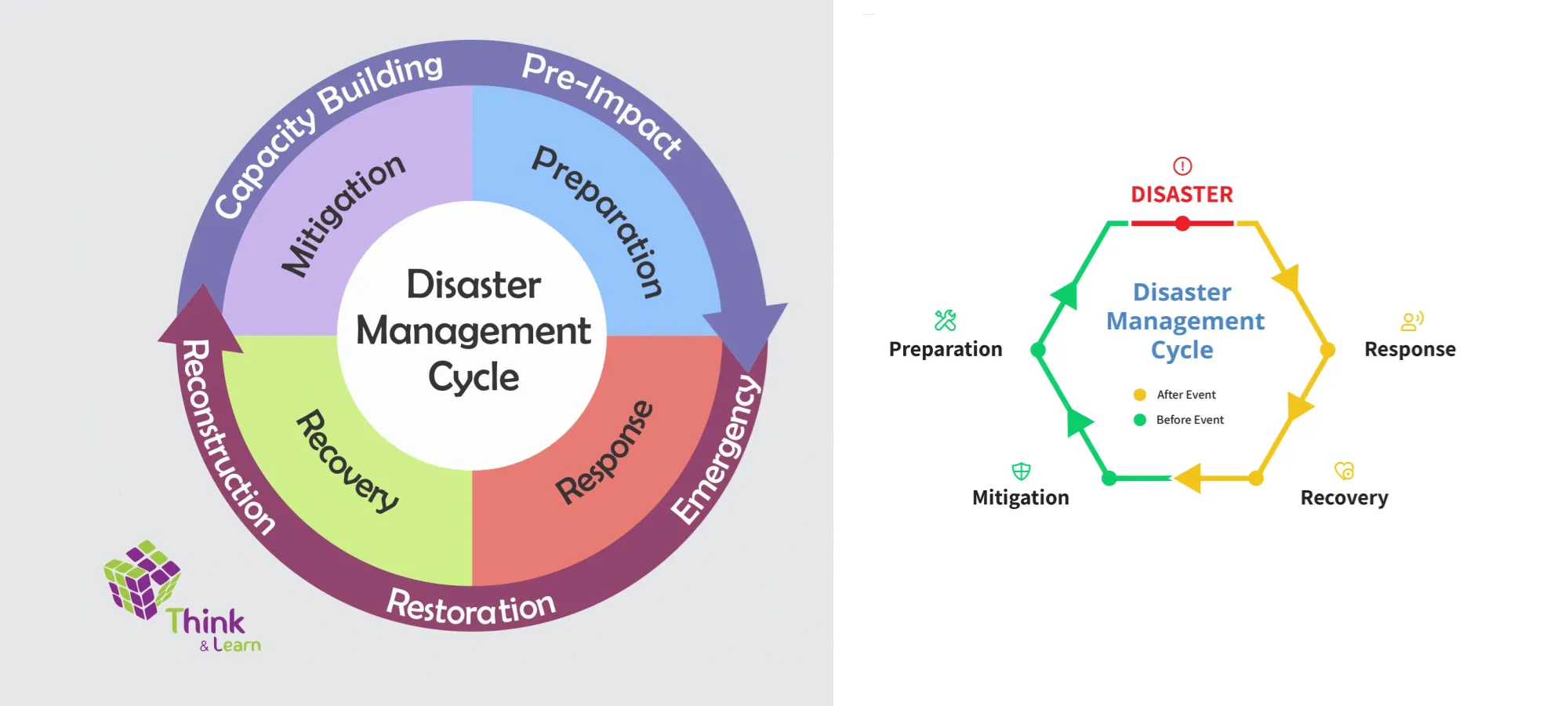
Overview
India faces a wide spectrum of natural disasters - from floods and cyclones to earthquakes, droughts, and heatwaves. Each disaster brings its own challenges, but one problem remains consistent: fragmented information, delayed coordination, and limited transparency across multiple stakeholders.
DRM.I (Integrated Disaster Response Management Platform) addresses this critical gap by creating a unified digital nervous system for disaster response - connecting information, logistics, people, and trust into one coordinated platform.
The Problem We’re Solving
Current disaster response in India suffers from:
- Multiple stakeholders operating in silos - government bodies, NGOs, volunteers, and citizens lack a common coordination system
- No single source of truth - information about what help is needed, where, and by whom remains scattered
- Limited tracking - service delivery, fund utilization, and outcomes are difficult to monitor
- Privacy concerns - vulnerable populations need protection while receiving assistance
- Accountability gaps - difficult to trace resource allocation and measure impact
Product Vision
A national-scale, integrated, map-driven, privacy-aware digital platform that enables timely, coordinated, transparent, and inclusive disaster response - before, during, and after disasters.
The platform operates like the human body:
- Neural network → Information and communication flows
- Circulatory system → Logistics, supplies, money, and services delivery
Core Principles
The platform is built on eight foundational principles:
| Principle | Impact |
|---|---|
| Preparedness → Response → Recovery | Covers full disaster lifecycle |
| Proactive & Adaptive | Responds to rapidly evolving situations |
| Transparency | Builds public trust through visibility |
| Privacy & Security | Protects vulnerable populations |
| Inclusivity & Accessibility | Ensures no one is left behind |
| Collaboration | Unifies multiple actors in one system |
| Data-driven Decision Making | Enables faster, better response |
| Resilience & Sustainability | Supports long-term recovery |
Who Uses DRM.I?
The platform serves seven key stakeholder groups:
- Governing Bodies - Oversight, coordination, policy enforcement
- Disaster Management Authorities - Command, response, recovery operations
- NGOs & International Organizations - Service delivery and relief operations
- Event Managers - On-ground execution and coordination
- Volunteers - Field support and community assistance
- Citizens & Communities - Request help and receive critical information
- Auditors & Moderators - Validation and misuse detection
Disaster Coverage
DRM.I supports all major disaster types affecting India:
- Floods & Urban Flooding
- Droughts
- Cyclones & Tsunamis
- Earthquakes & Landslides
- Heatwaves & Cold Waves
- Wildfires
- Avalanches
Platform Capabilities
1. Operational Dashboard
Real-time geographic maps, service status tracking, and live analytics provide situational awareness to all stakeholders.
2. Knowledge Management System
Centralized repository of wikis, guidelines, advisories, and an AI-powered chatbot for instant information access.
3. Service Coordination Engine
Matches service requests with providers, tracks status, and manages the complete lifecycle from request to resolution.
4. Money Pooling & Accountability
Transparent donation collection, cause-wise fund pooling, allocation tracking, and comprehensive audit trails.
5. Analytics & Audit Platform
Comprehensive logging, reporting, and anomaly detection to improve response and prevent misuse.
Key Technical Features
GeoMap-Based Services (The Heart of DRM.I)
Location is the single most critical dimension in disaster response. The platform provides:
Map Annotations:
- Service request markers with privacy controls
- Service provider locations
- Real-time status indicators (requested, in-progress, resolved)
- Audit and moderation overlays
Map Visualizations:
- Region-wise summaries and heatmaps
- Category-wise service counts
- Timeline views showing disaster evolution
- Advanced filters by service type and status
Map Intelligence:
- Optimized routing for service delivery
- Smart clustering of similar requests
- Export to Google Maps, Mapbox, and OpenStreetMap
- Vector tile caching for performance
Privacy & Security First
The platform implements Privacy Preservation & Protection (PPP):
- Anonymized identity-aware services
- User-controlled privacy settings
- Audit trails without exposing personal data
- Role-based access control (RBAC)
- OAuth2/SAML/JWT authentication
Service Lifecycle Management
Every service request flows through six stages:
- Request Creation - Citizens or authorities create service requests
- Verification (ReVV) - Community and authority validation
- Assignment & Coordination - Matching with appropriate providers
- Tracking & Updates - Real-time status monitoring
- Resolution - Service completion and confirmation
- Audit & Feedback - Post-service evaluation and learning
Multi-Channel Communication
- Context-aware chatbot for instant assistance
- WhatsApp, Messenger, and web integrations
- Multilingual support for India’s diverse population
- Request capture and feedback collection
Disaster Lifecycle Coverage
| Phase | Platform Support |
|---|---|
| Before | Risk assessment, preparedness planning, awareness campaigns |
| During | Real-time response coordination, resource routing, status tracking |
| After | Recovery operations, rehabilitation support, audits, learning |
Success Metrics
The platform measures impact through:
- Response time - Time from request to service assignment
- Resolution rate - Percentage of requests successfully resolved
- Financial transparency - Fund utilization visibility
- User trust - Adoption rate and satisfaction scores
- Efficiency gains - Reduction in duplication of effort
Technical Architecture Highlights
Non-Functional Requirements
| Category | Implementation |
|---|---|
| Scalability | Auto-scaling to handle disaster traffic spikes |
| Availability | High uptime SLAs during emergencies |
| Security | Rate limiting, isolation, separation of concerns |
| Performance | Fast map rendering with tile caching |
| Accessibility | WCAG compliance for all users |
| Localization | Multi-language support with local context |
| Compliance | Legal and ethical standards adherence |
The Road Ahead
Version 1 Scope
The initial release focuses on core coordination, mapping, and transparency features with proven technologies and established workflows.
Future Enhancements (Out of v1 Scope)
- Autonomous drone integration for aerial assessment
- Advanced predictive disaster modeling with AI
- IoT hardware integrations for sensor networks
- Blockchain for immutable audit trails
Why This Matters
Disasters don’t wait. Every minute counts. Every resource matters. Every person deserves dignity and help.
DRM.I transforms disaster response from a fragmented, reactive struggle into a coordinated, transparent, and effective system that serves all Indians - especially the most vulnerable.
“DRM.I is not just a platform. It’s India’s digital nervous system for disaster response - built on trust, powered by technology, and designed for humanity.”
Learn More
For technical documentation, API contracts, system architecture, and implementation details, please refer to the complete Product Requirements Document.
Tags: #DisasterManagement #DigitalIndia #EmergencyResponse #CivicTech #PublicInfrastructure
This post provides an overview of the DRM.I platform concept. Actual implementation would require collaboration with disaster management authorities, technology partners, and community stakeholders across India.