🌊 I-DRM: Deep Dive & Best Practices
A comprehensive look at Integrated Disaster Response Management (I-DRM) - Deep Dive & Best Practices
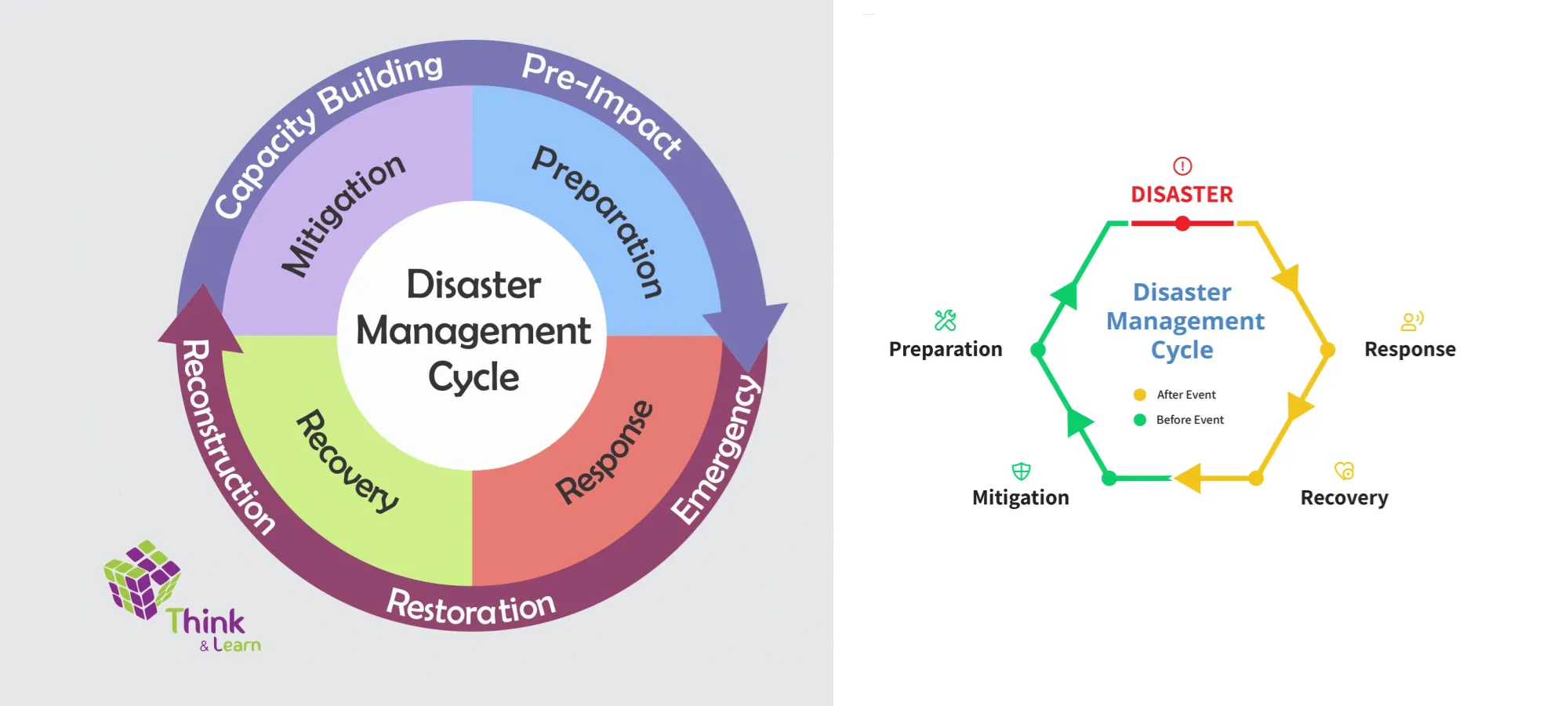
Table of Contents
- Executive Summary
- 1. Understanding Disasters and Disaster Management
- 2. The Disaster Management Lifecycle
- 3. Disaster Management Terminology Reference
- 4. Integrated Disaster Response Management (IDRM) Framework
- 5. IDRM System Architecture Components
- 5.1 Core Functional Modules
- Module 1: Identity and Access Management (IAM)
- Module 2: Geographic Information System (GIS)
- Module 3: Service Lifecycle Management
- Module 4: Review, Verification & Validation (ReVV)
- Module 5: Communication & Chatbot
- Module 6: Knowledge Management System (KMS)
- Module 7: Financial Transparency System
- Module 8: Analytics and Reporting
- 5.1 Core Functional Modules
- 6. Technology Stack and Best Practices
- 7. Context for PRD, HLD, and LLD Development
- 8. Implementation Roadmap
- 9. Stakeholder Management
- 10. Risk Management and Mitigation
- 11. Performance Metrics and KPIs
- 12. Legal and Compliance Framework
- 13. Training and Capacity Building
- 14. Future Enhancements and Innovation
- 15. Success Stories and Case Studies
- 16. Glossary of Terms
- 17. Conclusion
- References
Executive Summary
Integrated Disaster Response Management (I-DRM) represents a comprehensive, technology-enabled approach to managing disasters across their entire lifecycle. This guide provides foundational knowledge for novices and stakeholders involved in disaster management, serving as a reference for developing Product Requirements Documents (PRD), High-Level Design (HLD), and Low-Level Design (LLD) specifications.
IDRM systems aim to create coordinated, transparent, and effective disaster response mechanisms by integrating multiple stakeholders, data sources, and technological capabilities into a unified platform.
1. Understanding Disasters and Disaster Management
1.1 What is a Disaster?
A disaster is defined as a serious disruption of the functioning of a community or society at any scale due to hazardous events interacting with conditions of exposure, vulnerability, and capacity, leading to one or more of the following:
- Loss of human life
- Injuries or health impacts
- Economic losses
- Property and infrastructure damage
- Environmental degradation
1.2 Types of Disasters
Disasters can be categorized into two broad categories:
Natural Disasters
- Geophysical: Earthquakes, landslides, avalanches, volcanic eruptions
- Meteorological: Cyclones, hurricanes, tornadoes, heatwaves, cold waves
- Hydrological: Floods, tsunamis, urban flooding
- Climatological: Droughts, wildfires
- Biological: Pandemics, epidemics
Human-Made Disasters
- Industrial accidents
- Chemical spills
- Nuclear incidents
- Technological failures
- Conflicts and terrorism
- Transportation accidents
1.3 India’s Disaster Vulnerability
India faces multi-hazard vulnerability with:
- Over 58% of landmass prone to earthquakes
- 68% of cultivable land vulnerable to drought
- 12% of land area susceptible to floods
- 8,000 km coastline exposed to cyclones and tsunamis
- Increasing instances of urban flooding and heatwaves
2. The Disaster Management Lifecycle
Understanding the disaster management lifecycle is fundamental to implementing IDRM systems. Different organizations and frameworks use varying terminology, but the core concepts remain consistent.
2.1 Primary Models
Four-Phase Model (Most Common)
The four-phase model is widely adopted by organizations like FEMA, NDMA, and international agencies:
- Mitigation
- Preparedness
- Response
- Recovery
Five-Phase Model (Extended)
Some frameworks include an additional phase:
- Prevention
- Mitigation
- Preparedness
- Response
- Recovery
Six-Phase Model (Comprehensive)
The most detailed model separates recovery into distinct phases:
- Prevention
- Mitigation
- Preparedness
- Response
- Recovery
- Reconstruction
2.2 Detailed Phase Descriptions
Phase 1: Prevention (Where Applicable)
Definition: Activities aimed at completely avoiding disasters or eliminating hazards.
Key Activities:
- Land use planning
- Building code enforcement
- Environmental protection
- Risk-free development planning
- Infrastructure hardening
Technical Requirements for IDRM:
- Risk mapping and visualization
- Compliance tracking systems
- Regulatory enforcement monitoring
- Historical data analysis
Note: Not all disasters can be prevented (e.g., earthquakes), making this phase more applicable to human-made disasters.
Phase 2: Mitigation
Definition: Actions taken to reduce the severity, impact, or consequences of disasters that cannot be prevented.
Key Activities:
- Retrofitting buildings for earthquake resistance
- Creating defensible spaces around properties (wildfire)
- Installing levees and improving drainage systems (floods)
- Strengthening infrastructure
- Hazard mapping and vulnerability assessments
- Public awareness campaigns
Technical Requirements for IDRM:
- Facility Condition Assessment (FCA) databases
- Geographic Information Systems (GIS) for hazard mapping
- Asset inventory management
- Vulnerability analysis tools
- Cost-benefit analysis systems for mitigation projects
Example: Building schools with earthquake-resistant construction in seismic zones reduces potential casualties during earthquakes.
Phase 3: Preparedness
Definition: Planning, training, and resource positioning activities conducted before a disaster occurs.
Key Activities:
- Developing disaster response plans
- Conducting training and drills
- Pre-positioning relief materials
- Establishing early warning systems
- Creating communication protocols
- Building emergency operations centers (EOCs)
- Community education programs
- Evacuation planning
Technical Requirements for IDRM:
- Training management systems
- Drill and exercise documentation platforms
- Resource inventory tracking
- Communication system testing
- Early warning system integration
- Decision support systems
- Simulation and modeling tools
Example: Pre-stocking food, water, and medical supplies in logistics hubs near cyclone-prone coastal areas.
Phase 4: Response
Definition: Immediate actions taken during and immediately after a disaster to save lives, meet humanitarian needs, and prevent further damage.
Key Activities:
- Search and rescue operations
- Emergency medical care
- Evacuation of threatened populations
- Opening emergency shelters
- Providing mass care (food, water, clothing)
- Damage and needs assessment
- Activating emergency operations centers
- Coordinating multiple response agencies
Timeline: Typically begins immediately and continues through the first few weeks to six months, depending on disaster severity.
Technical Requirements for IDRM:
- Real-time incident management systems
- Resource tracking and allocation platforms
- Communication and coordination tools
- Geospatial mapping for situational awareness
- Needs assessment tools
- Volunteer and personnel management
- Mobile applications for field data collection
- Integration with emergency services (ambulance, fire, police)
Example: Deploying National Disaster Response Force (NDRF) teams immediately after an earthquake for search and rescue operations.
Phase 5: Recovery
Definition: The process of restoring communities to normalcy after the immediate threat has subsided.
Recovery is often divided into two sub-phases:
Short-Term Recovery (Early Recovery):
- Timeline: 6 months to 1 year
- Focus: Restoring basic services and temporary housing
- Activities: Debris removal, temporary shelter, utility restoration, psychosocial support
Long-Term Recovery (Medium-Term Recovery):
- Timeline: 1 year to decades
- Focus: Complete restoration of community functions and building resilience
- Activities: Permanent housing reconstruction, economic recovery, infrastructure rebuilding, community development
Key Activities:
- Restoring critical infrastructure (power, water, transportation)
- Rebuilding damaged structures
- Economic recovery and livelihood restoration
- Psychosocial support and mental health services
- Community capacity building
- Documentation and lessons learned
Technical Requirements for IDRM:
- Recovery project management systems
- Financial tracking and accountability platforms
- Beneficiary management databases
- Progress monitoring and reporting tools
- Grant and fund management systems
- Long-term needs assessment tools
- Community engagement platforms
Example: Implementing livelihood development programs and formal education restoration after floods stabilize.
Phase 6: Reconstruction (In Six-Phase Models)
Definition: Large-scale rebuilding of infrastructure, housing, and community systems to restore or improve pre-disaster conditions.
Key Activities:
- Rebuilding permanent housing
- Reconstructing infrastructure (roads, bridges, schools, hospitals)
- Economic revitalization
- Implementing improved building codes
- Incorporating lessons learned into better design
Technical Requirements for IDRM:
- Construction management systems
- Quality assurance and compliance tracking
- Environmental impact assessment tools
- Stakeholder coordination platforms
Note: In many frameworks, reconstruction is considered part of the recovery phase rather than a separate phase.
2.3 Lifecycle Characteristics
The Cyclical Nature
The disaster management cycle is cyclical, meaning:
- Each phase flows into the next
- Recovery activities inform future mitigation and preparedness
- Lessons learned improve subsequent disaster responses
- Communities are always in at least one phase
Non-Linear Reality
In practice, the disaster cycle is not strictly sequential:
- Phases overlap significantly
- Multiple disasters may occur simultaneously
- Recovery can be interrupted by new disasters
- Preparedness continues during response and recovery
The Recovery Continuum
Modern frameworks recognize that preparedness, response, and recovery are interconnected and continuous rather than separate sequential phases, especially in communities with significant disaster impacts.
3. Disaster Management Terminology Reference
3.1 Lifecycle Phases - Terminology Equivalents
Different organizations and frameworks use varying terminology for disaster management phases. This table shows equivalent terms across different models:
| Standard Term | Alternate Terms | Phase Focus | Timing |
|---|---|---|---|
| Prevention | Avoidance, Elimination | Completely avoiding disasters | Before disaster |
| Mitigation | Risk Reduction, Vulnerability Reduction, Amelioration | Reducing disaster impacts | Before disaster |
| Preparedness | Pre-disaster Planning, Readiness, Capacity Building | Planning and training | Before disaster |
| Response | Emergency Response, Reaction, Relief, Immediate Action | Life-saving actions | During and immediately after |
| Recovery | Restoration, Rehabilitation, Recuperation | Returning to normalcy | After disaster |
| Reconstruction | Rebuilding, Development, Build Back Better | Long-term rebuilding | Long-term after disaster |
3.2 Hierarchical Terminology Relationships
Understanding the hierarchical relationships between disaster management concepts:
| Level | Term | Definition | Examples |
|---|---|---|---|
| Level 1: Meta | Disaster Management | Overall framework and approach | Comprehensive emergency management, DRR |
| Disaster Risk Management (DRM) | Systematic process to reduce disaster risks | Risk assessment, policy development | |
| Disaster Risk Reduction (DRR) | Specific focus on reducing risks | Sendai Framework, vulnerability reduction | |
| Level 2: Strategic | Disaster Management Cycle | Continuous process model | Four-phase, five-phase, six-phase models |
| Disaster Continuum | Recognition of non-linear nature | Overlapping phases, continuous process | |
| National/State/District Plans | Planning documents | NDMP, SDMP, DDMP | |
| Level 3: Operational | Mitigation | Risk reduction activities | Structural measures, non-structural measures |
| Preparedness | Planning and readiness | Training, drills, stockpiling | |
| Response | Immediate actions | Search and rescue, relief distribution | |
| Recovery | Restoration activities | Short-term, long-term recovery | |
| Level 4: Tactical | Incident Command System (ICS) | Operational coordination structure | EOC activation, command posts |
| Emergency Operations Center (EOC) | Physical coordination facility | Situational awareness, resource coordination | |
| Standard Operating Procedures (SOPs) | Detailed operational guidance | Evacuation procedures, communication protocols | |
| Level 5: Activities | Search and Rescue | Specific response activity | Urban search, water rescue |
| Needs Assessment | Data collection activity | Rapid assessment, detailed assessment | |
| Relief Distribution | Logistics activity | Food distribution, medical aid | |
| Damage Assessment | Evaluation activity | Infrastructure survey, loss estimation |
3.3 India-Specific Terminology
Understanding India’s disaster management framework terminology:
| Term | Abbreviation | Level | Description |
|---|---|---|---|
| National Disaster Management Authority | NDMA | National | Apex body headed by Prime Minister |
| State Disaster Management Authority | SDMA | State | State-level body headed by Chief Minister |
| District Disaster Management Authority | DDMA | District | District-level coordination body |
| National Disaster Management Plan | NDMP | National | Strategic planning document |
| State Disaster Management Plan | SDMP | State | State-level planning document |
| District Disaster Management Plan | DDMP | District | District-level planning document |
| National Disaster Response Force | NDRF | National | Specialized response force |
| State Disaster Response Force | SDRF | State | State-level response force |
| Disaster Management Act, 2005 | DM Act | National | Legal framework legislation |
| National Policy on Disaster Management | NPDM | National | Policy framework document |
4. Integrated Disaster Response Management (IDRM) Framework
4.1 What is IDRM?
Integrated Disaster Response Management (IDRM) is a comprehensive, technology-enabled approach that:
- Unifies multiple stakeholders on a single platform
- Provides real-time information sharing and coordination
- Tracks resources, services, and outcomes transparently
- Covers the complete disaster lifecycle
- Preserves privacy while ensuring accountability
4.2 Core Principles of IDRM
1. Lifecycle Coverage
Principle: Support all phases from preparedness through recovery.
Implementation:
- Pre-disaster risk mapping and planning tools
- Real-time response coordination during disasters
- Long-term recovery and reconstruction tracking
2. Multi-Stakeholder Collaboration
Principle: Enable coordination among government, NGOs, volunteers, and citizens.
Implementation:
- Role-based access control (RBAC)
- Shared situational awareness
- Coordinated resource allocation
3. Data-Driven Decision Making
Principle: Use analytics and real-time data for informed decisions.
Implementation:
- Dashboard visualizations
- Predictive analytics
- Historical trend analysis
4. Transparency and Accountability
Principle: Build public trust through visible operations and financial tracking.
Implementation:
- Public-facing dashboards
- Audit trails for all actions
- Financial transaction transparency
5. Privacy Preservation
Principle: Protect vulnerable populations’ personal information.
Implementation:
- Anonymized data where appropriate
- User-controlled privacy settings
- Identity-aware but privacy-preserving services
6. Inclusivity and Accessibility
Principle: Ensure no one is left behind.
Implementation:
- Multi-language support
- Accessibility compliance (WCAG)
- Mobile-first design for broader reach
- Offline capabilities
7. Technology-Driven Efficiency
Principle: Leverage modern technology for speed and accuracy.
Implementation:
- Cloud-based infrastructure for scalability
- Mobile applications for field operations
- AI/ML for predictive capabilities
- GIS for location-based services
5. IDRM System Architecture Components
5.1 Core Functional Modules
Module 1: Identity and Access Management (IAM)
Purpose: Secure authentication and role-based authorization.
Key Features:
- OAuth2/SAML/JWT authentication
- Multi-factor authentication (MFA)
- Role-based access control (RBAC)
- User profile management
- Session management
User Roles:
- Governing Bodies: Policy oversight, high-level coordination
- Disaster Management Authorities: Command and control
- NGOs/International Organizations: Service delivery
- Event Managers: On-ground execution
- Volunteers: Field support
- Citizens: Service requests and information
- Auditors: Verification and compliance
- Moderators: Content and data validation
Module 2: Geographic Information System (GIS)
Purpose: Location-based visualization and analysis.
Key Features:
- Map Annotations:
- Service request markers
- Service provider locations
- Resource availability indicators
- Hazard zone overlays
- Status indicators (requested, in-progress, resolved)
- Map Visualizations:
- Heatmaps for request density
- Region-wise summaries
- Category-wise filtering
- Timeline playback
- Multi-layer visualization
- Map Intelligence:
- Route optimization for response teams
- Clustering of similar requests
- Proximity analysis
- Accessibility assessment
- Export to Google Maps/OSM
Technical Stack:
- GeoServer for map services
- GeoMapCache for tile caching
- Leaflet/Mapbox for frontend visualization
- PostGIS for spatial database
Module 3: Service Lifecycle Management
Purpose: Track disaster response services from request to resolution.
Service Request Structure:
1
2
3
4
5
6
7
8
9
10
11
12
13
14
Service Request {
  - Service Request ID (unique identifier)
  - Requestor ID (anonymized if needed)
  - Provider ID (assigned responder)
  - Service Type (medical, food, shelter, rescue, etc.)
  - Geo Location (latitude, longitude)
  - Priority Level (critical, high, medium, low)
  - Description (detailed need)
  - Status (requested, verified, assigned, in-progress, resolved)
  - Timestamps (created, updated, resolved)
  - Tasks and sub-tasks
  - Comments and updates
  - Attachments (photos, documents)
}
Service Flow:
- Request Creation: Citizen/authority creates service request
- Verification (ReVV): Validation of legitimacy
- Assignment: Matching with available providers
- Tracking: Real-time status updates
- Resolution: Service completion confirmation
- Audit & Feedback: Post-service evaluation
Module 4: Review, Verification & Validation (ReVV)
Purpose: Ensure data accuracy and prevent fraud.
Key Features:
- Automated validation rules
- Community verification (crowd-sourced)
- Authority verification (official confirmation)
- Photo/document verification
- Geolocation verification
- Duplicate detection
- Anomaly detection using AI/ML
Verification Levels:
- Level 0: Unverified (newly created)
- Level 1: Automated checks passed
- Level 2: Community verified
- Level 3: Authority verified
- Level 4: Field verified (ground truth)
Module 5: Communication & Chatbot
Purpose: Accessible, multilingual interaction interface.
Key Features:
- Context-aware conversational AI
- Natural language understanding (NLU)
- Multi-channel integration:
- Facebook Messenger
- Telegram
- Web chat widget
- SMS fallback
- Multilingual support (22 Indian languages)
- Voice input/output
- Automated request capture from conversations
- Escalation to human operators
Use Cases:
- Service request submission
- Status inquiries
- Information dissemination
- Feedback collection
- Guidance and advisories
Module 6: Knowledge Management System (KMS)
Purpose: Centralized repository of disaster management knowledge.
Key Features:
- Wiki: Community-editable documentation
- Guidelines: Official SOPs and procedures
- Best Practices: Lessons learned repository
- Training Materials: E-learning content
- Advisories: Real-time warnings and alerts
- FAQs: Common questions and answers
- Search: Full-text and semantic search
Content Categories:
- Disaster-specific protocols
- Legal and regulatory information
- Technical documentation
- Historical case studies
- Contact directories
Module 7: Financial Transparency System
Purpose: Transparent donation and fund management.
Key Features:
- Donation Collection:
- Multiple payment gateways
- Cryptocurrency support (optional)
- Cause-specific fundraising
- Anonymous donation options
- Tax receipt generation
- Fund Allocation:
- Transparent allocation rules
- Real-time tracking
- Geographic distribution visualization
- Cause-wise spending reports
- Audit and Reporting:
- Automated audit trails
- Public financial dashboards
- Compliance reporting
- Third-party audit integration
Module 8: Analytics and Reporting
Purpose: Data-driven insights and continuous improvement.
Key Features:
- Operational Dashboards:
- Real-time KPIs
- Service status overview
- Resource utilization
- Geographic distribution
- Historical Analysis:
- Trend analysis
- Comparative studies
- Performance metrics
- Efficiency benchmarking
- Predictive Analytics:
- Demand forecasting
- Resource requirement prediction
- Risk assessment
- Vulnerability mapping
- Reporting:
- Standard reports (daily, weekly, monthly)
- Custom report builder
- Export formats (PDF, Excel, CSV)
- Scheduled report delivery
6. Technology Stack and Best Practices
6.1 Recommended Technology Stack
Frontend Layer
Web Application:
- Framework: React.js / Vue.js / Angular
- UI Library: Material-UI / Ant Design / Chakra UI
- State Management: Redux / Vuex / NgRx
- Mapping: Leaflet.js / Mapbox GL JS
- Charts: Chart.js / D3.js / Recharts
Mobile Application:
- Cross-Platform: React Native / Flutter
- Native: Swift (iOS) / Kotlin (Android)
- Offline Storage: SQLite / Realm
Backend Layer
API Server:
- Language: Node.js / Python / Java / Go
- Framework: Express.js / FastAPI / Spring Boot / Gin
- API Standard: RESTful / GraphQL
- Authentication: JWT / OAuth2 / SAML
Database:
- Relational: PostgreSQL with PostGIS extension
- NoSQL: MongoDB / Cassandra (for logs and analytics)
- Cache: Redis / Memcached
- Search: Elasticsearch / Apache Solr
Messaging:
- Queue: RabbitMQ / Apache Kafka
- Real-time: WebSocket / Socket.io
- Notifications: Firebase Cloud Messaging / OneSignal
Infrastructure Layer
Cloud Platform:
- Preferred: AWS / Google Cloud Platform / Microsoft Azure
- Government Cloud: NIC Cloud (India-specific) / Meghraj
Containerization:
- Containers: Docker
- Orchestration: Kubernetes / Docker Swarm
- Service Mesh: Istio / Linkerd
CI/CD:
- Pipeline: Jenkins / GitLab CI / GitHub Actions
- Version Control: Git (GitHub / GitLab / Bitbucket)
- Artifact Repository: Docker Registry / Artifactory
Security Layer
- Web Application Firewall (WAF): Cloudflare / AWS WAF
- DDoS Protection: Cloudflare / Akamai
- SSL/TLS: Let’s Encrypt / Commercial certificates
- Secrets Management: HashiCorp Vault / AWS Secrets Manager
- Identity Provider: Keycloak / Auth0 / Okta
6.2 Best Practices
6.2.1 Scalability Best Practices
Horizontal Scaling:
- Design stateless services for easy replication
- Use load balancers (NGINX / HAProxy / AWS ALB)
- Implement auto-scaling based on metrics
- Design for microservices architecture
Vertical Scaling:
- Optimize database queries and indexes
- Use caching aggressively (Redis / CDN)
- Implement connection pooling
- Optimize media and asset delivery
Database Scaling:
- Implement read replicas for read-heavy operations
- Use database sharding for large datasets
- Implement proper indexing strategies
- Use materialized views for complex queries
6.2.2 Availability and Reliability
High Availability:
- Deploy across multiple availability zones
- Implement active-active or active-passive failover
- Use health checks and automatic recovery
- Maintain at least 99.9% uptime SLA
Disaster Recovery:
- Regular automated backups (daily minimum)
- Geographic redundancy (multi-region)
- Recovery Time Objective (RTO): < 4 hours
- Recovery Point Objective (RPO): < 1 hour
- Regular disaster recovery drills
Monitoring and Alerting:
- Application Performance Monitoring (APM): New Relic / Datadog
- Log Aggregation: ELK Stack / Splunk
- Infrastructure Monitoring: Prometheus + Grafana
- Uptime Monitoring: Pingdom / UptimeRobot
- Alert notification: PagerDuty / OpsGenie
6.2.3 Security Best Practices
Application Security:
- Input validation and sanitization
- Output encoding (XSS prevention)
- Parameterized queries (SQL injection prevention)
- CSRF token implementation
- Regular security audits and penetration testing
- OWASP Top 10 compliance
Data Security:
- Encryption at rest (AES-256)
- Encryption in transit (TLS 1.3+)
- Sensitive data masking
- Personally Identifiable Information (PII) protection
- Compliance with data protection regulations
Access Control:
- Principle of least privilege
- Regular access review and revocation
- Multi-factor authentication (MFA) enforcement
- Session timeout and management
- Rate limiting and throttling
Audit and Compliance:
- Comprehensive audit logging
- Tamper-proof log storage
- Regular compliance audits
- Incident response plan
- Security training for all team members
6.2.4 Performance Optimization
Frontend Optimization:
- Code splitting and lazy loading
- Asset minification and compression
- Image optimization (WebP, lazy loading)
- Service Worker for offline capabilities
- CDN for static asset delivery
- Browser caching strategies
Backend Optimization:
- Database query optimization
- API response caching
- Asynchronous processing for heavy operations
- Connection pooling
- Batch processing where applicable
Mobile Optimization:
- Offline-first architecture
- Data synchronization strategies
- Efficient battery and memory usage
- Adaptive image loading based on network
6.2.5 Accessibility Standards
WCAG 2.1 Level AA Compliance:
- Keyboard navigation support
- Screen reader compatibility
- Sufficient color contrast (4.5:1 minimum)
- Text alternatives for images
- Captions for video content
- Resizable text (up to 200%)
- Clear focus indicators
Mobile Accessibility:
- Touch target size (minimum 44x44 pixels)
- Orientation-independent design
- Simplified navigation for smaller screens
6.2.6 Localization and Internationalization
Multi-Language Support:
- Unicode (UTF-8) encoding throughout
- Externalized language strings
- Right-to-left (RTL) language support
- Date/time/number format localization
- Cultural sensitivity in content and design
Indian Context:
- Support for 22 scheduled languages minimum
- Support for Indian numbering system
- Regional cultural considerations
- Local payment gateway integration
- Compliance with Indian regulations (IT Act, etc.)
7. Context for PRD, HLD, and LLD Development
7.1 Minimum Viable Product (MVP) Context
MVP Scope Definition
An MVP for IDRM should focus on core disaster response capabilities with limited but functional features.
MVP Feature Set
Essential Features (Must Have):
- User Authentication:
- Basic login/logout
- Two user roles: Citizens and Responders
- Simple password-based authentication
- Service Request Management:
- Citizens can create service requests
- Basic request types: Medical, Food, Shelter, Rescue
- Location capture (GPS or manual entry)
- Request status: Open, In Progress, Resolved
- Basic GIS Visualization:
- Simple map view with request markers
- Basic clustering for overlapping requests
- Filter by request type and status
- Assignment and Tracking:
- Manual assignment of requests to responders
- Status updates by responders
- Basic notification system (email/SMS)
- Simple Dashboard:
- Count of open/closed requests
- Basic statistics by category
- Recent activity feed
Infrastructure for MVP:
- Single cloud region deployment
- Single-instance database (with backups)
- Basic monitoring and logging
- Simple CI/CD pipeline
MVP Timeline: 3-4 months for development and testing
MVP Success Criteria:
- Successfully handle 1,000 concurrent users
- Process 10,000 service requests per day
- 99% uptime during pilot
- Positive user feedback (>70% satisfaction)
MVP Context Examples for Documentation
For PRD (MVP):
1
2
3
4
5
6
7
8
9
10
11
12
13
14
15
## MVP Scope
The MVP will focus on core service request management for a single
disaster type (floods) in a pilot district. The system will support:
- 500 active responders
- 10,000 registered citizens
- 5,000 service requests per event
- Basic GIS visualization
- Simple mobile web interface

Out of Scope for MVP:
- Advanced analytics
- Financial management module
- Multi-language support (English only)
- AI/ML capabilities
- Chatbot integration
For HLD (MVP):
1
2
3
4
5
6
7
8
## MVP Architecture
- Monolithic application architecture
- Single PostgreSQL database instance
- Simple REST API
- React-based web frontend
- Progressive Web App (PWA) for mobile
- Deployed on AWS (single region)
- Basic load balancer for redundancy
For LLD (MVP):
1
2
3
4
5
6
7
8
9
10
11
12
13
14
15
16
17
18
19
20
21
## MVP Database Schema (Simplified)

### Users Table
- user_id (Primary Key)
- username
- email
- password_hash
- role (citizen/responder)
- created_at

### Service Requests Table
- request_id (Primary Key)
- user_id (Foreign Key)
- request_type
- latitude
- longitude
- description
- status
- assigned_to (user_id)
- created_at
- updated_at
7.2 Full-Fledged Product (FFP) Context
FFP Scope Definition
A full-fledged IDRM platform supports all disaster types, complete lifecycle, and advanced features for national-scale deployment.
FFP Feature Set
Comprehensive Features:
- Advanced Identity Management:
- OAuth2, SAML, SSO integration
- 10+ distinct user roles with granular permissions
- Identity federation with government systems
- Biometric authentication support
- Complete Service Lifecycle:
- Multi-stage verification system
- Complex workflow engine
- Task management and dependencies
- Resource allocation optimization
- Quality assurance and audit trails
- Advanced GIS Capabilities:
- Multi-layer visualization (risk zones, infrastructure, demographics)
- 3D terrain visualization
- Real-time tracking of response teams
- Routing and optimization algorithms
- Predictive heatmaps using ML
- Integration with satellite imagery
- AI-Powered Chatbot:
- 22+ Indian language support
- Voice input/output
- Context-aware responses
- Multi-channel deployment (WhatsApp, Web, SMS)
- Automated triage and prioritization
- Financial Transparency System:
- Multi-currency donation support
- Blockchain for transparency (optional)
- Automated audit and compliance
- Integration with banking systems
- Tax receipt generation
- Advanced Analytics:
- Real-time dashboards with drill-down
- Predictive analytics using ML
- Resource optimization algorithms
- Historical trend analysis
- Comparative benchmarking
- Customizable reporting
- Knowledge Management:
- Comprehensive wiki system
- Version-controlled documentation
- E-learning management system (LMS)
- Multilingual content
- Search with NLP
- Integration Ecosystem:
- Early warning system integration
- Weather API integration
- Social media monitoring
- News aggregation
- Emergency broadcast system
- Third-party NGO system integration
Infrastructure for FFP:
- Multi-region, multi-zone deployment
- Microservices architecture
- Container orchestration (Kubernetes)
- Advanced load balancing and auto-scaling
- Comprehensive monitoring and observability
- Disaster recovery with < 1 hour RTO
- 99.99% uptime SLA
FFP Timeline: 18-24 months for phased rollout
FFP Context Examples for Documentation
For PRD (FFP):
1
2
3
4
5
6
7
8
9
10
11
12
13
14
15
16
17
18
## FFP Scope
The full-fledged IDRM platform will support:
- All disaster types covered by NDMA guidelines
- National-scale deployment (all states and districts)
- 500,000+ registered users (citizens + responders)
- 1 million service requests per major disaster event
- Real-time coordination of 10,000+ concurrent responders
- Integration with 50+ government and NGO systems
- Multilingual support for 22 Indian languages
- Mobile-first design with offline capabilities

Advanced Capabilities:
- AI-powered request prioritization
- Predictive analytics for resource planning
- Blockchain-based financial transparency
- Real-time satellite imagery integration
- Drone coordination for assessment
- IoT sensor network integration
For HLD (FFP):
1
2
3
4
5
6
7
8
9
10
11
12
13
14
15
16
17
18
19
20
21
22
23
24
25
26
27
## FFP Architecture

### Microservices Architecture
1. **Identity Service**: Authentication and authorization
2. **GIS Service**: Geospatial data and visualization
3. **Request Service**: Service request lifecycle
4. **Assignment Service**: Resource allocation and optimization
5. **Communication Service**: Multi-channel messaging
6. **Analytics Service**: Real-time and historical analytics
7. **Financial Service**: Donation and fund management
8. **Knowledge Service**: Content management and wiki
9. **Integration Service**: External system connectors
10. **Notification Service**: Multi-channel alerts

### Data Layer
- PostgreSQL with PostGIS (primary data store)
- MongoDB (logs and unstructured data)
- Redis (caching and session management)
- Elasticsearch (search and analytics)
- Apache Kafka (event streaming)

### Deployment
- Multi-region deployment (North, South, East, West India)
- Kubernetes for orchestration
- Service mesh (Istio) for inter-service communication
- API Gateway (Kong/AWS API Gateway)
- CDN for static content (CloudFront/Cloudflare)
For LLD (FFP):
1
2
3
4
5
6
7
8
9
10
11
12
13
14
15
16
17
18
19
20
21
22
23
24
25
26
27
28
29
30
31
32
33
34
35
36
37
38
39
40
41
42
43
44
45
46
47
48
49
50
## FFP Database Schema (Comprehensive)

### Users Table (Extended)
- user_id (UUID, Primary Key)
- username (unique)
- email (unique)
- phone (unique)
- password_hash
- role_id (Foreign Key to Roles)
- profile_data (JSONB)
- privacy_settings (JSONB)
- is_active (boolean)
- is_verified (boolean)
- created_at (timestamp)
- updated_at (timestamp)
- last_login (timestamp)

### Roles Table
- role_id (Primary Key)
- role_name (unique)
- permissions (JSONB array)
- hierarchy_level (integer)

### Service Requests Table (Extended)
- request_id (UUID, Primary Key)
- requestor_id (Foreign Key to Users)
- request_type_id (Foreign Key to Request_Types)
- geolocation (PostGIS geometry point)
- address (text)
- priority_level (enum: critical, high, medium, low)
- status (enum: requested, verified, assigned, in_progress, resolved, closed)
- verification_level (integer: 0-4)
- description (text)
- attachments (JSONB array of URLs)
- assigned_to (Foreign Key to Users)
- assigned_at (timestamp)
- resolved_at (timestamp)
- metadata (JSONB)
- created_at (timestamp)
- updated_at (timestamp)

### Service Request Tasks Table
- task_id (UUID, Primary Key)
- request_id (Foreign Key)
- task_name (text)
- assigned_to (Foreign Key to Users)
- status (enum)
- dependencies (JSONB array)
- created_at (timestamp)
- completed_at (timestamp)
8. Implementation Roadmap
8.1 Phase-wise Development Approach
Phase 0: Foundation (Months 1-3)
Objectives:
- Establish technical architecture
- Set up development infrastructure
- Create design system and UI/UX guidelines
- Develop core authentication module
Deliverables:
- Technical architecture document
- Infrastructure setup (cloud, CI/CD)
- Design system documentation
- Working authentication system
Phase 1: MVP Development (Months 4-6)
Objectives:
- Build core service request management
- Implement basic GIS visualization
- Develop simple mobile interface
- Pilot testing in one district
Deliverables:
- Functional MVP
- Mobile web application (PWA)
- Basic admin dashboard
- Pilot deployment
Phase 2: Enhancement (Months 7-12)
Objectives:
- Add verification system (ReVV)
- Implement advanced GIS features
- Develop native mobile apps
- Expand to multiple districts
Deliverables:
- Verification system
- Enhanced GIS module
- iOS and Android apps
- Multi-district deployment
Phase 3: Advanced Features (Months 13-18)
Objectives:
- Implement AI chatbot
- Build financial transparency module
- Develop analytics platform
- Add knowledge management system
Deliverables:
- Multi-lingual chatbot
- Financial management module
- Analytics dashboards
- Wiki and documentation system
Phase 4: Integration & Scaling (Months 19-24)
Objectives:
- Integrate with government systems
- Implement advanced analytics and ML
- Scale to national level
- Establish monitoring and support
Deliverables:
- Integrated national platform
- ML-powered features
- National deployment
- 24/7 support infrastructure
9. Stakeholder Management
9.1 Key Stakeholder Groups
Government Agencies
National Level:
- National Disaster Management Authority (NDMA)
- Ministry of Home Affairs (MHA)
- National Informatics Centre (NIC)
State Level:
- State Disaster Management Authorities (SDMAs)
- State Emergency Operations Centers
District Level:
- District Disaster Management Authorities (DDMAs)
- District Collectors/Deputy Commissioners
Engagement Strategy:
- Regular steering committee meetings
- Compliance with government IT guidelines
- Integration with existing government systems
- Training and capacity building programs
NGOs and International Organizations
Types:
- International NGOs (Red Cross, UNICEF, WHO)
- National NGOs (operating across India)
- Local NGOs (community-based organizations)
Engagement Strategy:
- API access for integration
- Regular coordination meetings
- Shared situational awareness
- Collaborative training programs
Private Sector
Types:
- Corporate CSR initiatives
- Logistics companies
- Technology partners
- Telecommunication providers
Engagement Strategy:
- Partnership agreements
- Resource sharing protocols
- Joint disaster response exercises
Civil Society and Citizens
Groups:
- Community-based organizations
- Volunteer networks
- Academic institutions
- General public
Engagement Strategy:
- Community awareness programs
- Volunteer registration drives
- Public feedback mechanisms
- Social media engagement
9.2 Governance Structure
Steering Committee
Composition:
- Representatives from NDMA
- State disaster management officials
- Technical experts
- NGO representatives
Responsibilities:
- Strategic direction
- Policy decisions
- Resource allocation
- Performance review
Technical Advisory Board
Composition:
- Technology experts
- GIS specialists
- Data scientists
- Security experts
Responsibilities:
- Technical architecture review
- Innovation recommendations
- Quality assurance
- Standards compliance
Operations Committee
Composition:
- Platform administrators
- State coordinators
- Support team leads
Responsibilities:
- Day-to-day operations
- Incident management
- User support
- System maintenance
10. Risk Management and Mitigation
10.1 Technical Risks
| Risk | Impact | Probability | Mitigation Strategy |
|---|---|---|---|
| System downtime during disaster | Critical | Medium | Multi-region deployment, automatic failover, 99.99% SLA |
| Data loss | Critical | Low | Regular backups, geographic redundancy, < 1 hour RPO |
| Security breach | High | Medium | Penetration testing, WAF, encryption, security audits |
| Performance degradation | High | Medium | Load testing, auto-scaling, performance monitoring |
| Integration failures | Medium | High | Robust API design, fallback mechanisms, thorough testing |
10.2 Operational Risks
| Risk | Impact | Probability | Mitigation Strategy |
|---|---|---|---|
| Low user adoption | High | Medium | Extensive training, user-friendly design, awareness campaigns |
| Data quality issues | High | Medium | Validation rules, verification system, audit mechanisms |
| Coordination gaps | Medium | High | Clear SOPs, regular drills, communication protocols |
| Resource shortages | Medium | Medium | Resource pooling, partnerships, pre-positioning |
| Misinformation | Medium | Medium | Verification system, official sources, fact-checking |
10.3 Governance Risks
| Risk | Impact | Probability | Mitigation Strategy |
|---|---|---|---|
| Regulatory non-compliance | High | Low | Legal review, compliance team, regular audits |
| Stakeholder conflicts | Medium | Medium | Governance framework, escalation protocols, mediation |
| Funding gaps | High | Low | Multi-source funding, government commitment, sustainability plan |
| Political interference | Medium | Low | Transparent operations, accountability mechanisms, legal safeguards |
11. Performance Metrics and KPIs
11.1 Operational KPIs
Response Time Metrics:
- Time to First Response: Average time from request creation to first responder assignment
- Target: < 15 minutes for critical requests
- Time to Resolution: Average time from request to completion
- Target: Varies by service type
- Verification Time: Average time for request verification
- Target: < 30 minutes
Service Delivery Metrics:
- Request Completion Rate: Percentage of requests resolved
- Target: > 95%
- Service Quality Score: User satisfaction rating
- Target: > 4.0/5.0
- Resource Utilization: Percentage of available resources actively deployed
- Target: > 80% during active disasters
11.2 System Performance KPIs
Availability Metrics:
- System Uptime: Percentage of time system is operational
- Target: > 99.99% (< 53 minutes downtime/year)
- API Response Time: Average API latency
- Target: < 200ms for 95th percentile
- Page Load Time: Average time to interactive
- Target: < 3 seconds on 4G connection
Scalability Metrics:
- Concurrent Users: Maximum simultaneous active users
- Target: 100,000+ without degradation
- Requests Per Second: API throughput
- Target: 10,000+ RPS
- Database Performance: Query execution time
- Target: < 100ms for 99th percentile
11.3 Impact Metrics
Lives Saved and Protected:
- Number of successful rescue operations
- People evacuated proactively
- Medical emergencies addressed
Economic Impact:
- Reduction in response time
- Cost savings through coordination
- Prevention of duplicate efforts
Transparency Metrics:
- Percentage of funds with full traceability
- Number of public-facing dashboards views
- Audit completion rate
11.4 User Engagement Metrics
- Active Users: Daily/Monthly active users
- Request Volume: Number of service requests per disaster
- Volunteer Participation: Number of active volunteers
- Stakeholder Adoption: Percentage of districts/states using the platform
12. Legal and Compliance Framework
12.1 Indian Legal Framework
Key Legislation:
- Disaster Management Act, 2005: Primary legal framework for disaster management in India
- Information Technology Act, 2000: Governs digital transactions and data
- Right to Information Act, 2005: Ensures transparency and accountability
- Aadhaar Act, 2016: For identity verification (if applicable)
- Digital Personal Data Protection Act, 2023: Data privacy and protection
Compliance Requirements:
- Data localization (data stored within India)
- Regular security audits
- Privacy by design principles
- Consent management
- Right to erasure and portability
12.2 International Standards
Disaster Management Standards:
- Sendai Framework for Disaster Risk Reduction
- Sphere Standards (humanitarian response)
- ISO 22320 (Emergency management)
Technology Standards:
- ISO 27001 (Information Security)
- ISO 9001 (Quality Management)
- WCAG 2.1 Level AA (Accessibility)
- GDPR principles (for international cooperation)
12.3 Data Protection and Privacy
Personal Data Handling:
- Explicit consent for data collection
- Purpose limitation principle
- Data minimization
- Storage limitation
- Anonymization where possible
Security Measures:
- Encryption at rest and in transit
- Access controls and audit logs
- Regular security assessments
- Incident response plan
- Data breach notification protocols
13. Training and Capacity Building
13.1 Training Programs
For Government Officials
Content:
- Platform navigation and usage
- Dashboard interpretation
- Report generation
- User management
- Incident coordination
Duration: 2-day intensive workshop + ongoing support
For NGOs and Organizations
Content:
- Service provider registration
- Request management
- Resource coordination
- Reporting and documentation
Duration: 1-day workshop + online tutorials
For Volunteers
Content:
- Mobile app usage
- Field data collection
- Safety protocols
- Communication procedures
Duration: Half-day orientation + field training
For Citizens
Content:
- How to request help
- Using the mobile app/chatbot
- Safety information
- Feedback mechanisms
Delivery: Short video tutorials, infographics, community sessions
13.2 Training Delivery Methods
In-Person Training:
- Hands-on workshops
- Simulation exercises
- Role-playing scenarios
Online Training:
- Video tutorials
- Interactive e-learning modules
- Webinars and live sessions
- Self-paced courses
Documentation:
- User manuals
- Quick reference guides
- FAQs
- Video demonstrations
13.3 Capacity Building Initiatives
- Regular disaster response drills
- Table-top exercises
- Technology familiarization workshops
- Inter-agency coordination exercises
- Community awareness programs
14. Future Enhancements and Innovation
14.1 Emerging Technologies
Artificial Intelligence and Machine Learning
Applications:
- Predictive disaster modeling
- Automated damage assessment from satellite imagery
- Natural language processing for social media monitoring
- Intelligent resource allocation
- Fraud detection in requests
Internet of Things (IoT)
Applications:
- Sensor networks for early warning
- Real-time infrastructure monitoring
- Smart resource tracking (RFID)
- Environmental data collection
- Automated alerts from critical infrastructure
Blockchain Technology
Applications:
- Immutable audit trails
- Transparent fund tracking
- Decentralized coordination
- Smart contracts for automated disbursements
Drones and Robotics
Applications:
- Aerial damage assessment
- Supply delivery to inaccessible areas
- Search and rescue operations
- Real-time video surveillance
- Infrastructure inspection
Augmented and Virtual Reality
Applications:
- Immersive training simulations
- Virtual disaster scenario planning
- AR-assisted field operations
- Remote expert guidance
14.2 Advanced Analytics
Predictive Capabilities:
- Machine learning models for disaster prediction
- Vulnerability assessment algorithms
- Resource demand forecasting
- Risk profiling of areas and populations
Prescriptive Analytics:
- Optimal resource allocation
- Route optimization for response teams
- Automated triage and prioritization
- Decision support systems
14.3 Enhanced Collaboration
Global Integration:
- International disaster response networks
- Cross-border coordination protocols
- Shared best practices platforms
- Joint training and exercises
Public-Private Partnerships:
- Technology provider collaborations
- Corporate resource mobilization
- Academic research partnerships
- Startup innovation programs
15. Success Stories and Case Studies
15.1 International Examples
Japan’s Disaster Management System
Highlights:
- Integrated early warning systems
- Public alert infrastructure (J-Alert)
- Community-based disaster reduction
- Advanced seismic monitoring
Lessons for IDRM:
- Importance of public education
- Value of regular drills
- Need for robust early warning integration
New Zealand’s Civil Defence System
Highlights:
- Coordinated response across agencies
- Effective use of social media
- Community engagement programs
- Transparent communication
Lessons for IDRM:
- Multi-channel communication importance
- Community resilience building
- Clear coordination protocols
United States FEMA Integration
Highlights:
- National Incident Management System (NIMS)
- Incident Command System (ICS)
- Technology-enabled coordination
- Comprehensive training programs
Lessons for IDRM:
- Standardized response procedures
- Role clarity and command structure
- Importance of regular training
15.2 Indian Context Examples
Kerala Floods 2018
Challenges:
- Coordination among multiple agencies
- Information fragmentation
- Resource tracking difficulties
How IDRM Would Help:
- Unified platform for all stakeholders
- Real-time situational awareness
- Efficient resource allocation
- Transparent fund management
Cyclone Fani 2019 (Odisha)
Success Factors:
- Massive evacuation (1.2 million people)
- Early warning dissemination
- Community preparedness
IDRM Enhancement Opportunities:
- Automated evacuation coordination
- Real-time shelter capacity tracking
- Post-disaster needs assessment
- Recovery monitoring
16. Glossary of Terms
| Term | Definition |
|---|---|
| Disaster | A serious disruption of community functioning causing widespread human, material, economic, or environmental losses |
| Disaster Management | The organization, planning, and application of measures to prepare for, respond to, and recover from disasters |
| Disaster Risk Reduction (DRR) | Systematic efforts to analyze and reduce causal factors of disasters |
| Early Warning System (EWS) | Set of capacities to forecast, generate, and disseminate timely warnings |
| Emergency Operations Center (EOC) | Centralized facility for disaster management coordination |
| Geospatial Information System (GIS) | System for capturing, storing, analyzing, and managing spatial data |
| Hazard | Dangerous phenomenon that may cause loss of life, injury, property damage, or environmental degradation |
| Incident Command System (ICS) | Standardized on-scene emergency management system |
| Mitigation | Actions taken to reduce or eliminate long-term disaster risk |
| National Disaster Management Authority (NDMA) | Apex body for disaster management in India |
| National Disaster Response Force (NDRF) | Specialized force for disaster response in India |
| Preparedness | Activities and measures taken before a disaster to ensure effective response |
| Recovery | Process of restoring, rebuilding, and rehabilitating communities after a disaster |
| Resilience | Ability of a system, community, or society to resist, absorb, and recover from disasters |
| Response | Immediate actions during and after a disaster to save lives and meet humanitarian needs |
| Risk | Combination of probability of a disaster event and its negative consequences |
| Sendai Framework | International agreement for disaster risk reduction (2015-2030) |
| Standard Operating Procedure (SOP) | Set of step-by-step instructions for routine operations |
| Stakeholder | Individual, group, or organization with interest or concern in disaster management |
| Vulnerability | Conditions determined by physical, social, economic, and environmental factors increasing susceptibility to hazards |
17. Conclusion
Integrated Disaster Response Management (IDRM) represents the future of coordinated, efficient, and transparent disaster management. By leveraging modern technology, data-driven decision-making, and multi-stakeholder collaboration, IDRM platforms can significantly improve disaster outcomes, save lives, and build more resilient communities.
The successful implementation of IDRM requires:
- Strong governance and leadership from government authorities
- Active participation from all stakeholders
- Continuous innovation in technology and processes
- Sustained investment in infrastructure and capacity building
- Community engagement and public awareness
- Learning from experience through regular evaluation and improvement
As India continues to face diverse disaster challenges, an integrated, technology-enabled approach like IDRM becomes not just beneficial but essential for protecting lives, livelihoods, and infrastructure.
Key Takeaways
- Lifecycle Approach: Effective disaster management covers prevention, mitigation, preparedness, response, recovery, and reconstruction
- Integration is Critical: Fragmented systems lead to coordination failures; unified platforms enable seamless collaboration
- Technology as Enabler: Modern technologies (GIS, AI, mobile apps) dramatically improve speed and effectiveness
- Privacy and Transparency: Balancing individual privacy with operational transparency builds trust
- Scalability Matters: Systems must handle both normal operations and disaster-time spikes
- Training is Essential: Technology alone is insufficient; human capacity building is equally important
- Continuous Improvement: Learning from each disaster improves future response
References
National Disaster Management Authority (NDMA) - Official Website
UNDRR - Sendai Framework for Disaster Risk Reduction 2015-2030
Sphere Standards - Humanitarian Charter and Minimum Standards
This document serves as a comprehensive guide for understanding and implementing Integrated Disaster Response Management systems. For specific implementation guidance, please refer to detailed PRD, HLD, and LLD documents developed with appropriate context for your organization’s needs.
Last Updated: December 22, 2025