🧭 Cybersecurity 101: An Introductory Guide & Essential Foundations
Databases - A Quick Guide - Complete Functional Categorization, Best Choices, Differences, Cloud Support, Python Connectivity & Analytical Comparison!
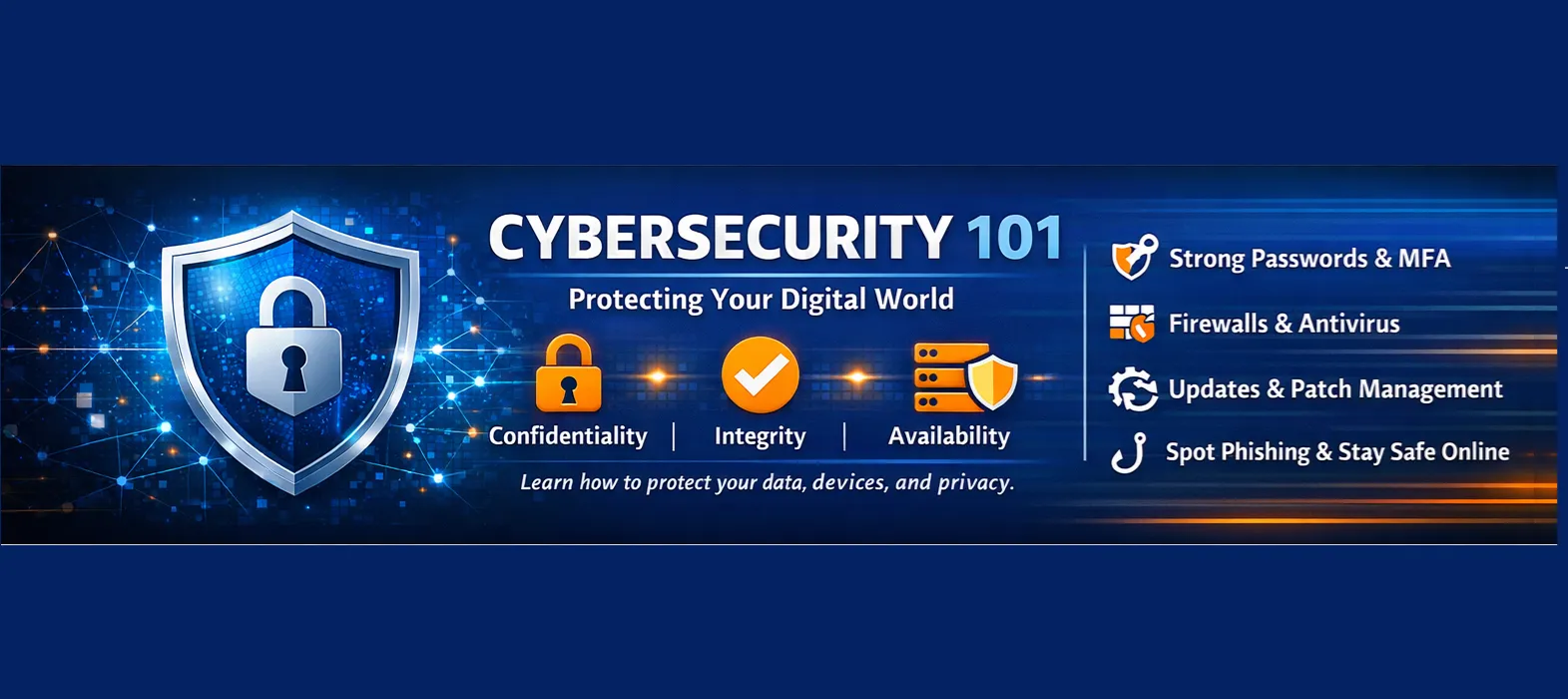
Cybersecurity 101 Resources
Introduction to Cybersecurity
Cybersecurity represents the practice of protecting computer systems, networks, programs, and data from digital attacks, unauthorized access, damage, or theft. As organizations and individuals increasingly rely on digital platforms for operations, communication, and data storage, cybersecurity has evolved from a technical specialty into a critical necessity affecting every aspect of modern life.
What is Cybersecurity?
Cybersecurity encompasses the technologies, processes, and practices designed to defend computers, servers, mobile devices, electronic systems, networks, and data from malicious attacks. It operates across multiple layers including network security, application security, information security, operational security, disaster recovery, and end-user education.
The field addresses threats ranging from common malware infections and phishing attacks to sophisticated advanced persistent threats orchestrated by nation-states. Modern cybersecurity professionals must understand both defensive measures to protect systems and offensive techniques to identify vulnerabilities before adversaries exploit them.
Why Cybersecurity Matters in 2025
The digital transformation of business and society has created unprecedented security challenges. Consider these factors:
Expanding Attack Surface: Organizations now maintain hybrid cloud environments, remote workforces, Internet of Things devices, and interconnected supply chains, each representing potential entry points for attackers.
Increasing Threat Sophistication: Cybercriminals employ artificial intelligence, machine learning, and automated tools to discover and exploit vulnerabilities at scale, while ransomware-as-a-service models have lowered barriers to entry for malicious actors.
Regulatory Requirements: Governments worldwide have enacted data protection regulations requiring organizations to implement specific security controls and report breaches, with significant penalties for non-compliance.
Financial Impact: Data breaches cost organizations millions in remediation, legal fees, regulatory fines, and reputational damage, making cybersecurity a critical business concern rather than merely a technical issue.
Core Cybersecurity Principles
The CIA Triad
The CIA triad represents the three fundamental pillars of information security: Confidentiality, Integrity, and Availability. This model guides organizations in developing comprehensive security policies and serves as a framework for evaluating security measures.
Confidentiality
Confidentiality preserves authorized restrictions on information access and disclosure, protecting personal privacy and proprietary information. Organizations maintain confidentiality through:
- Access controls limiting who can view or modify data
- Encryption protecting data both at rest and in transit
- Authentication mechanisms verifying user identities
- Authorization systems defining appropriate access levels
- Data classification schemes organizing information by sensitivity
Breaches of confidentiality occur when unauthorized parties gain access to protected information, whether through technical exploits, social engineering, or insider threats. Organizations must balance security measures with usability, as overly restrictive controls can impede legitimate business operations.
Integrity
Integrity ensures data accuracy, consistency, and trustworthiness throughout its lifecycle, guarding against improper modification or destruction. Key integrity measures include:
- Hashing algorithms generating unique fingerprints for data verification
- Digital signatures confirming authenticity and detecting tampering
- Version control systems tracking changes and enabling rollback
- Access controls preventing unauthorized modifications
- Validation routines checking data correctness during input and processing
Integrity failures range from accidental corruption through system errors to deliberate manipulation by malicious actors. Organizations must implement controls ensuring authorized changes occur through proper channels while detecting and preventing unauthorized alterations.
Availability
Availability ensures timely and reliable access to information and systems when authorized users need them. Organizations maintain availability through:
- Redundant systems and infrastructure eliminating single points of failure
- Regular backups enabling recovery from data loss
- Disaster recovery plans outlining response procedures
- Network capacity planning preventing overload
- Security measures protecting against denial-of-service attacks
Organizations must balance security controls with system accessibility, as excessive restrictions can impair availability. The goal involves maintaining systems sufficiently secure without preventing legitimate users from accessing needed resources.
Defense in Depth
Defense in depth implements multiple layers of security controls throughout an IT environment, ensuring that if one measure fails, others continue providing protection. This strategy recognizes that no single security control is perfect.
Key layers include:
- Physical Security: Controlling access to facilities and hardware
- Network Security: Firewalls, intrusion detection systems, and network segmentation
- Host Security: Endpoint protection, antivirus, and configuration management
- Application Security: Secure coding practices and input validation
- Data Security: Encryption and data loss prevention
- User Education: Training users to recognize and avoid threats
Principle of Least Privilege
The principle of least privilege grants users, programs, and systems only the minimum access rights necessary to perform their functions. This approach limits potential damage from compromised accounts, reduces the attack surface, and simplifies security management.
Implementation involves:
- Role-based access control assigning permissions by job function
- Regular access reviews removing unnecessary privileges
- Just-in-time access providing temporary elevated permissions
- Separation of duties preventing any single person from controlling critical processes
Understanding Cyber Threats
Common Threat Categories
Malware
Malware encompasses malicious software designed to damage systems, steal information, or enable unauthorized access. Major categories include:
- Viruses: Self-replicating programs attaching to legitimate files
- Worms: Standalone programs spreading across networks automatically
- Trojans: Malicious code disguised as legitimate software
- Ransomware: Malware encrypting data and demanding payment for decryption
- Spyware: Software monitoring user activities and stealing information
- Rootkits: Tools hiding malicious code and maintaining persistent access
Social Engineering
Social engineering manipulates people into divulging confidential information or performing actions compromising security. Techniques include:
- Phishing: Fraudulent emails impersonating legitimate organizations
- Spear Phishing: Targeted attacks using personalized information
- Vishing: Voice calls attempting to extract sensitive information
- Smishing: SMS messages containing malicious links
- Pretexting: Creating fabricated scenarios to gain trust
- Baiting: Offering something enticing to lure victims
Network Attacks
Network attacks exploit vulnerabilities in network infrastructure and protocols:
- Denial of Service: Overwhelming systems with traffic to render them unavailable
- Man-in-the-Middle: Intercepting communications between parties
- DNS Spoofing: Redirecting traffic to malicious destinations
- ARP Spoofing: Impersonating network devices
- Packet Sniffing: Capturing network traffic to extract sensitive information
Web Application Attacks
Web applications face numerous attack vectors:
- SQL Injection: Inserting malicious database queries
- Cross-Site Scripting: Injecting malicious scripts into web pages
- Cross-Site Request Forgery: Tricking users into executing unwanted actions
- Authentication Bypass: Circumventing login mechanisms
- Session Hijacking: Stealing user session tokens
The Cyber Kill Chain
The Cyber Kill Chain describes the phases adversaries progress through when conducting attacks:
- Reconnaissance: Gathering information about targets
- Weaponization: Creating malicious payloads
- Delivery: Transmitting weapons to targets
- Exploitation: Triggering vulnerabilities
- Installation: Installing backdoors
- Command and Control: Establishing remote control
- Actions on Objectives: Achieving attack goals
Understanding this framework helps defenders implement controls disrupting attacks at each stage.
Essential Cybersecurity Domains
Network Security
Network security protects data during transmission and controls access to network resources. Key components include:
Firewalls
Firewalls examine network traffic based on predetermined rules, allowing or blocking connections. Types include:
- Packet-filtering firewalls inspecting individual packets
- Stateful inspection firewalls tracking connection states
- Application-layer firewalls analyzing application-specific traffic
- Next-generation firewalls combining multiple inspection techniques
Intrusion Detection and Prevention Systems
IDS/IPS solutions monitor network traffic for suspicious activities:
- Signature-based detection identifying known attack patterns
- Anomaly-based detection flagging deviations from normal behavior
- IDS systems generating alerts for investigation
- IPS systems automatically blocking detected threats
Virtual Private Networks
VPNs create encrypted tunnels protecting data transmission across untrusted networks, enabling secure remote access and site-to-site connectivity.
Network Segmentation
Dividing networks into isolated segments limits lateral movement after breaches and contains damage from compromised systems.
Application Security
Application security incorporates security measures throughout the software development lifecycle:
Secure Coding Practices
- Input validation preventing injection attacks
- Output encoding preventing cross-site scripting
- Authentication and authorization implementing proper access controls
- Error handling avoiding information disclosure
- Cryptographic operations using strong algorithms properly
Security Testing
- Static application security testing analyzing source code
- Dynamic application security testing testing running applications
- Interactive application security testing combining both approaches
- Penetration testing simulating real-world attacks
Cloud Security
Cloud computing introduces unique security considerations:
Shared Responsibility Model
Cloud providers secure infrastructure, while customers secure their data, applications, and access controls. Understanding this division of responsibility is critical.
Identity and Access Management
Cloud environments require robust IAM implementing:
- Multi-factor authentication
- Single sign-on
- Role-based access control
- Just-in-time access
- Privileged access management
Data Protection
Organizations must encrypt data at rest and in transit, implement data loss prevention, and maintain proper data classification and handling procedures.
Endpoint Security
Endpoints represent common attack targets requiring multiple protection layers:
- Antivirus and anti-malware software
- Endpoint detection and response solutions
- Host-based firewalls
- Application whitelisting
- Full disk encryption
- Patch management
Security Frameworks and Standards
NIST Cybersecurity Framework
The NIST Cybersecurity Framework provides organizations with guidance for managing cybersecurity risk through five core functions:
Identify
Developing organizational understanding of cybersecurity risk to systems, assets, data, and capabilities. Activities include:
- Asset management inventorying systems and data
- Business environment understanding mission objectives
- Governance establishing policies and procedures
- Risk assessment identifying threats and vulnerabilities
- Risk management strategy defining risk tolerance
Protect
Implementing safeguards ensuring delivery of critical services. Categories include:
- Identity management and access control
- Awareness and training
- Data security
- Information protection processes
- Protective technology
Detect
Implementing activities identifying cybersecurity events. Components include:
- Anomalies and events detection
- Security continuous monitoring
- Detection processes maintaining visibility
Respond
Taking action regarding detected cybersecurity incidents. Elements include:
- Response planning
- Communications coordinating response activities
- Analysis understanding impacts
- Mitigation containing incidents
- Improvements learning from events
Recover
Maintaining resilience and restoring capabilities impaired by incidents:
- Recovery planning
- Improvements incorporating lessons learned
- Communications coordinating restoration activities
ISO 27001
ISO 27001 provides requirements for establishing, implementing, maintaining, and improving information security management systems. The standard addresses:
- Security policy
- Organization of information security
- Asset management
- Access control
- Cryptography
- Physical and environmental security
- Operations security
- Communications security
- System acquisition, development, and maintenance
- Supplier relationships
- Incident management
- Business continuity
- Compliance
Building Foundational Skills
Technical Prerequisites
Operating Systems Knowledge
Understanding how operating systems function forms the foundation for cybersecurity work:
- Linux: Command line proficiency, file permissions, process management, networking
- Windows: Active Directory, PowerShell, registry, group policies
- macOS: Unix foundations, security features, system administration
Networking Fundamentals
Essential networking concepts include:
- OSI and TCP/IP models
- IP addressing and subnetting
- DNS and DHCP
- Routing and switching
- Common protocols (HTTP, HTTPS, FTP, SSH, etc.)
- Network troubleshooting
Programming and Scripting
Programming skills enable automation and tool development:
- Python: General-purpose scripting, security tool development
- Bash/PowerShell: System administration and automation
- JavaScript: Web application security testing
- SQL: Database security and injection testing
Security Tools and Technologies
Analysis Tools
- Wireshark: Network protocol analyzer
- tcpdump: Command-line packet capture
- Volatility: Memory forensics
- Autopsy: Disk forensics
Vulnerability Assessment
- Nmap: Network discovery and port scanning
- Nessus: Vulnerability scanner
- OpenVAS: Open-source vulnerability scanner
- Nikto: Web server scanner
Penetration Testing
- Metasploit: Exploitation framework
- Burp Suite: Web application testing
- OWASP ZAP: Web application scanner
- SQLmap: Automated SQL injection
Security Monitoring
- Splunk: Security information and event management
- Elastic Stack: Log analysis and visualization
- Wazuh: Security monitoring platform
- Suricata: Network intrusion detection
Career Pathways in Cybersecurity
Entry-Level Positions
Security Analyst
Security analysts monitor systems for security events, investigate incidents, and implement protective measures. Required skills include:
- Understanding of security concepts and technologies
- Log analysis and SIEM tools
- Threat intelligence
- Incident response procedures
Junior Penetration Tester
Entry-level penetration testers conduct security assessments under supervision, learning to identify vulnerabilities and document findings.
Security Operations Center Analyst
SOC analysts monitor security alerts, triage incidents, and escalate issues requiring deeper investigation.
Intermediate Roles
Security Engineer
Security engineers design and implement security solutions, configure security tools, and develop security architectures.
Incident Responder
Incident responders investigate security breaches, contain threats, remediate compromised systems, and document lessons learned.
Security Consultant
Consultants advise organizations on security matters, conduct assessments, and help clients develop security strategies.
Advanced Positions
Security Architect
Security architects design comprehensive security frameworks, select appropriate technologies, and ensure alignment with business objectives.
Penetration Testing Lead
Lead penetration testers conduct complex assessments, manage testing teams, and deliver executive-level reports.
Chief Information Security Officer
CISOs establish organizational security strategies, manage security programs, and communicate risk to executive leadership.
Professional Development
Essential Certifications
Entry-Level Certifications
- CompTIA Security+: Foundational security concepts
- CompTIA Network+: Networking fundamentals
- Certified in Cybersecurity (CC) by ISC²: Entry-level security certification
Intermediate Certifications
- Certified Ethical Hacker (CEH): Ethical hacking techniques
- CompTIA CySA+: Security analytics
- CompTIA PenTest+: Penetration testing
- GIAC Security Essentials (GSEC): Hands-on security skills
Advanced Certifications
- Certified Information Systems Security Professional (CISSP): Security management
- Offensive Security Certified Professional (OSCP): Hands-on penetration testing
- GIAC Certified Incident Handler (GCIH): Incident response
- Certified Information Security Manager (CISM): Security management
Specialized Certifications
- Certified Cloud Security Professional (CCSP): Cloud security
- GIAC Certified Forensic Analyst (GCFA): Digital forensics
- GIAC Reverse Engineering Malware (GREM): Malware analysis
- Certified Information Systems Auditor (CISA): Security auditing
Continuous Learning Strategies
Practical Experience
- Home lab environments for hands-on practice
- Capture the Flag competitions
- Bug bounty programs
- Open-source project contributions
- Personal projects and tool development
Online Learning Platforms
- TryHackMe: Interactive security training
- HackTheBox: Penetration testing practice
- Cybrary: Security courses and paths
- Coursera/edX: University-level courses
- Pluralsight: Technical training
Community Engagement
- Security conferences and meetups
- Online forums and communities
- Professional organizations
- Mentorship programs
- Speaking and content creation
Terminology Reference
Lifecycle Phases Terminology
Different cybersecurity frameworks and methodologies use varying terminology to describe security processes. Understanding these equivalencies helps navigate different contexts.
Security Operations Lifecycle
| Phase Name | Alternative Terms | Description |
|---|---|---|
| Preparation | Planning, Foundation | Establishing security baseline and readiness |
| Detection | Identification, Discovery | Recognizing security events and anomalies |
| Analysis | Investigation, Assessment | Understanding the nature and scope of incidents |
| Containment | Isolation, Quarantine | Limiting incident impact and preventing spread |
| Eradication | Remediation, Removal | Eliminating threats from the environment |
| Recovery | Restoration, Normalization | Returning systems to operational state |
| Post-Incident | Lessons Learned, Review | Documenting findings and improving processes |
Penetration Testing Phases
| Phase Name | Alternative Terms | Description |
|---|---|---|
| Reconnaissance | Information Gathering, Footprinting | Collecting target information |
| Scanning | Enumeration, Discovery | Identifying open ports and services |
| Gaining Access | Exploitation, Entry | Leveraging vulnerabilities to access systems |
| Maintaining Access | Persistence, Implantation | Establishing continued control |
| Covering Tracks | Anti-Forensics, Cleanup | Removing evidence of activities |
Risk Management Phases
| Phase Name | Alternative Terms | Description |
|---|---|---|
| Risk Identification | Discovery, Recognition | Finding potential security risks |
| Risk Assessment | Analysis, Evaluation | Measuring likelihood and impact |
| Risk Treatment | Mitigation, Response | Selecting and implementing controls |
| Risk Monitoring | Tracking, Review | Ongoing risk evaluation |
Hierarchical Framework Comparison
Understanding how different security frameworks relate to each other helps practitioners apply knowledge across contexts.
Framework Hierarchy
Strategic Level (Governance)
- NIST Cybersecurity Framework (Govern Function)
- ISO 27001 (ISMS Requirements)
- COSO Enterprise Risk Management
- COBIT (Governance Framework)
Tactical Level (Implementation)
- NIST SP 800-53 (Security Controls)
- CIS Controls (Critical Security Controls)
- PCI DSS (Payment Card Industry Standards)
- HIPAA Security Rule
Operational Level (Procedures)
- Incident Response Plans
- Standard Operating Procedures
- Security Runbooks
- Work Instructions
Technical Level (Tools and Technologies)
- Security Tool Configurations
- Technical Implementation Guides
- Vendor Best Practices
- Platform-Specific Guidelines
Control Categories Alignment
| NIST CSF Function | ISO 27001 Clause | CIS Control Category |
|---|---|---|
| Identify | Information Security Policies | Inventory and Control |
| Protect | Access Control | Secure Configuration |
| Detect | Operations Security | Continuous Monitoring |
| Respond | Incident Management | Incident Response |
| Recover | Business Continuity | Data Recovery |
Best Practices for Beginners
Starting Your Journey
Build a Strong Foundation
Focus on understanding fundamental concepts before pursuing advanced topics. Master networking, operating systems, and basic programming before attempting specialized areas.
Develop Practical Skills
Theory alone is insufficient. Set up lab environments, practice with security tools, and apply concepts to real scenarios.
Join the Community
Engage with other security professionals through forums, conferences, and local meetups. The cybersecurity community values knowledge sharing and mutual support.
Stay Current
Subscribe to security news sources, follow researchers on social media, and regularly update your knowledge as threats and technologies evolve.
Pursue Certifications Strategically
Select certifications aligning with career goals and current skill level. Avoid collecting credentials without developing underlying competencies.
Common Pitfalls to Avoid
Overspecializing Too Early
Develop broad foundational knowledge before focusing on narrow specializations, as early specialization limits career flexibility.
Neglecting Soft Skills
Communication, documentation, and teamwork matter as much as technical abilities in professional environments.
Tool-Focused Learning
Understanding underlying concepts enables adaptation when tools change, while purely tool-focused knowledge becomes obsolete quickly.
Ignoring Legal and Ethical Boundaries
Always obtain proper authorization before testing security measures, and understand legal implications of security activities.
Conclusion
Cybersecurity represents both a challenging technical discipline and a critical societal need. Success requires commitment to continuous learning, practical skill development, and professional networking. The field offers diverse career paths, competitive compensation, and the opportunity to make meaningful contributions protecting digital assets and infrastructure.
Beginning a cybersecurity career involves building strong fundamentals in computing, networking, and security concepts, then progressively developing specialized expertise aligned with career interests. Whether pursuing offensive security, defensive operations, governance, or specialized domains, the principles and practices outlined in this guide provide a solid foundation.
The cybersecurity landscape continually evolves as new technologies emerge and threats adapt. Embrace this evolution as an opportunity for growth rather than an obstacle, maintaining curiosity and dedication to lifelong learning. With persistence and proper guidance, anyone motivated to protect digital systems can build a rewarding cybersecurity career.
References
Cybersecurity Roadmap - roadmap.sh
Cybersecurity Mastery Roadmap - GitHub
Cyber Security Roadmap for Beginners - IIT Kanpur EICTA
NIST Cybersecurity Framework - National Institute of Standards and Technology
The NIST Cybersecurity Framework (CSF) 2.0 - NIST
Understanding the NIST Cybersecurity Framework - Federal Trade Commission
What is the CIA Triad and Why is it Important? - Fortinet
CIA Triad (Confidentiality, Integrity and Availability) - TechTarget
What’s The CIA Triad? Confidentiality, Integrity, & Availability Explained - Splunk
What is the CIA Triad? - CSO Online
NIST Cybersecurity Framework - Wikipedia
NIST Cybersecurity Framework (NIST CSF) Overview & Guide - AuditBoard
What Is NIST Cybersecurity Framework (CSF)? - Cisco
This guide is intended for educational purposes and reflects current cybersecurity practices as of December 2024. Cybersecurity is a rapidly evolving field; readers should verify information with current sources and adapt recommendations to their specific contexts.